
Embrace the Art of Making
Discover how Project Solace transforms garment-making into a mindful ritual, fostering self-authorship and emotional care through each crafted piece.
Xicheng Huang
11/1/20253 min read


What Inspired SOLACE
SOLACE didn’t arrive as a lightning bolt — it grew quietly out of noticing how people move through their days, and how easily care becomes something we postpone. Not the dramatic, cinematic moments of care, but the small ones: the soft pause before leaving the door, the way fabric settles on the shoulders when you exhale, the instinct to wrap yourself in something warm on days when the world feels sharp.
In the studio stream, I found myself circling a question that kept tugging at my sleeve:
What if design didn’t always rush to fix problems, but instead created space — for dignity, for self-authorship, for breathing room inside ordinary life?
Most “solutions” we encounter today focus on survival, productivity, and efficiency. We either move faster, optimise harder, or consume better. Yet much of life happens in the in-between — in corridors of waiting, in the commute, in the quiet rituals before work, in the stillness after it. Those liminal moments shape us just as much as the big ones, and they often go unnoticed, un-held.
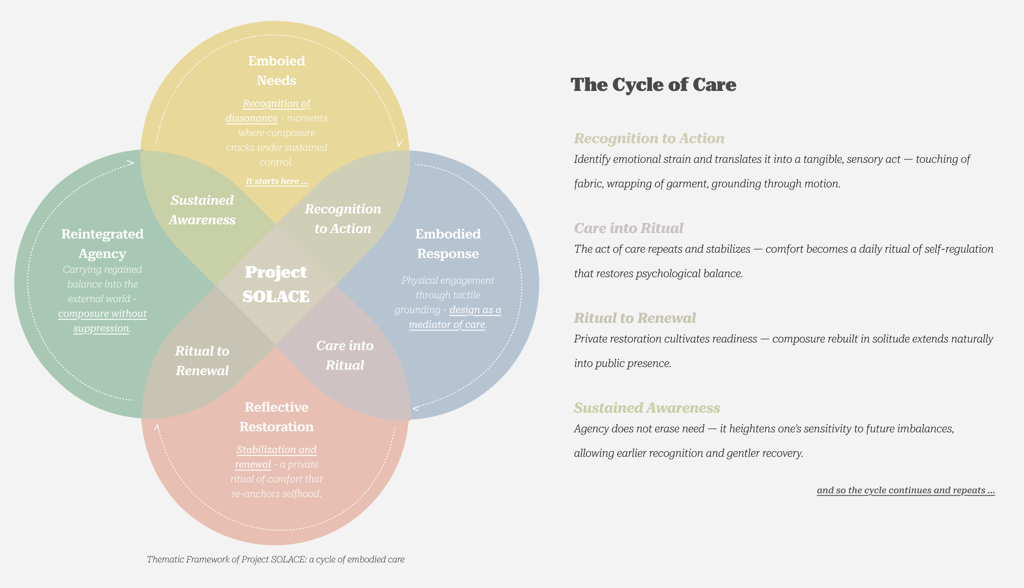
SOLACE grew from the belief that care doesn’t have to be heroic. Sometimes, it’s simply having the right texture under your fingertips, or a garment that feels like it listens to you rather than instructs you. It’s the choice to wrap, fasten, adjust — not because you must, but because the act itself restores a sense of presence.
A practice of grounding oneself, one stitch or buckle at a time.
Not designed for people — designed with them
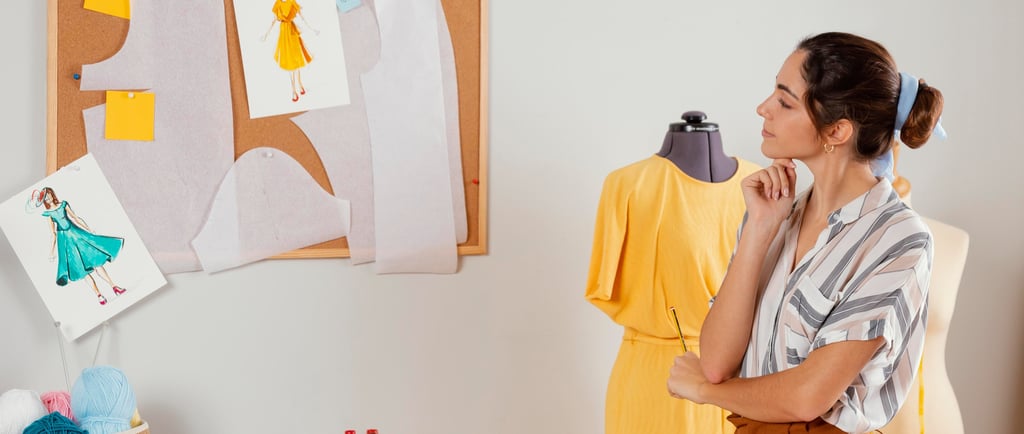
The project began with prototyping frames and textiles, but the real material was agency. Agency to choose fabric that feels right. Agency to trace, pin, hem, and shape. Agency to make a mess, start again, and discover what the hands know before the head does.
Rather than creating a garment to be purchased finished, SOLACE became a framework that invites personal authorship. A box of tools, patterns, and textures — not a prescription but an opening. You don’t receive comfort; you make it. In the process, you meet yourself in the work.
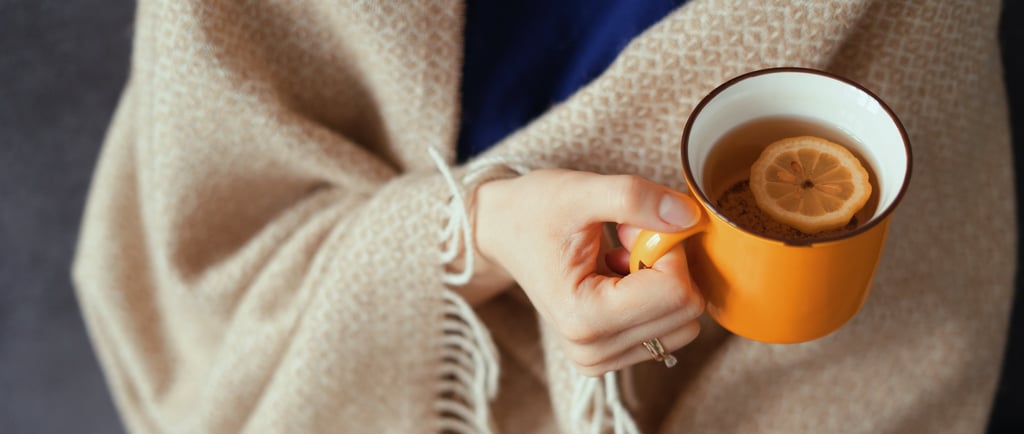
Young adulthood — whatever that means to each person, beyond numbers — holds a particular crossroads: stepping into independence while still learning how to belong to oneself. It’s a time where control can feel like sand in the palm — present one day, slipping the next. Craft has a way of solidifying that sand just enough to move with purpose again.
Softness as strength
There is a stereotype that care must be delicate, fragile, or sentimental. SOLACE challenges that. Rituals of care are not weakness — they are craft, discipline, and self-respect disguised as softness. A well-cut sleeve and a firm elastic strap can carry as much confidence as any suit of armour, without the clang and bravado.
The cape form was not chosen for theatrics, but because layering itself is a language — of protection, of reveal, of becoming. We shed layers when we feel safe. We wrap when we need anchoring. The body knows before we explain it.
A project that keeps breathing
SOLACE isn’t finished — nor should it be. The DIY kit exists so that each person can reinterpret comfort in their own way. Some will follow the pattern precisely; others will invent new silhouettes. Someone will stitch slowly after a long week; someone else will tear through felt joyfully in the midnight quiet. Each version will be honest to the hands that made it.
This project is as much about craft as it is about learning to dwell in your own presence — not rushing through life, but touching it.
In the end, SOLACE is not a cape.
It is a pause you can wear.
A reminder that comfort can be made, not waited for.
That care, when shaped by your own hands, becomes less a product and more a practice.